

Made for Engineering: The Makerspace Discovery Program

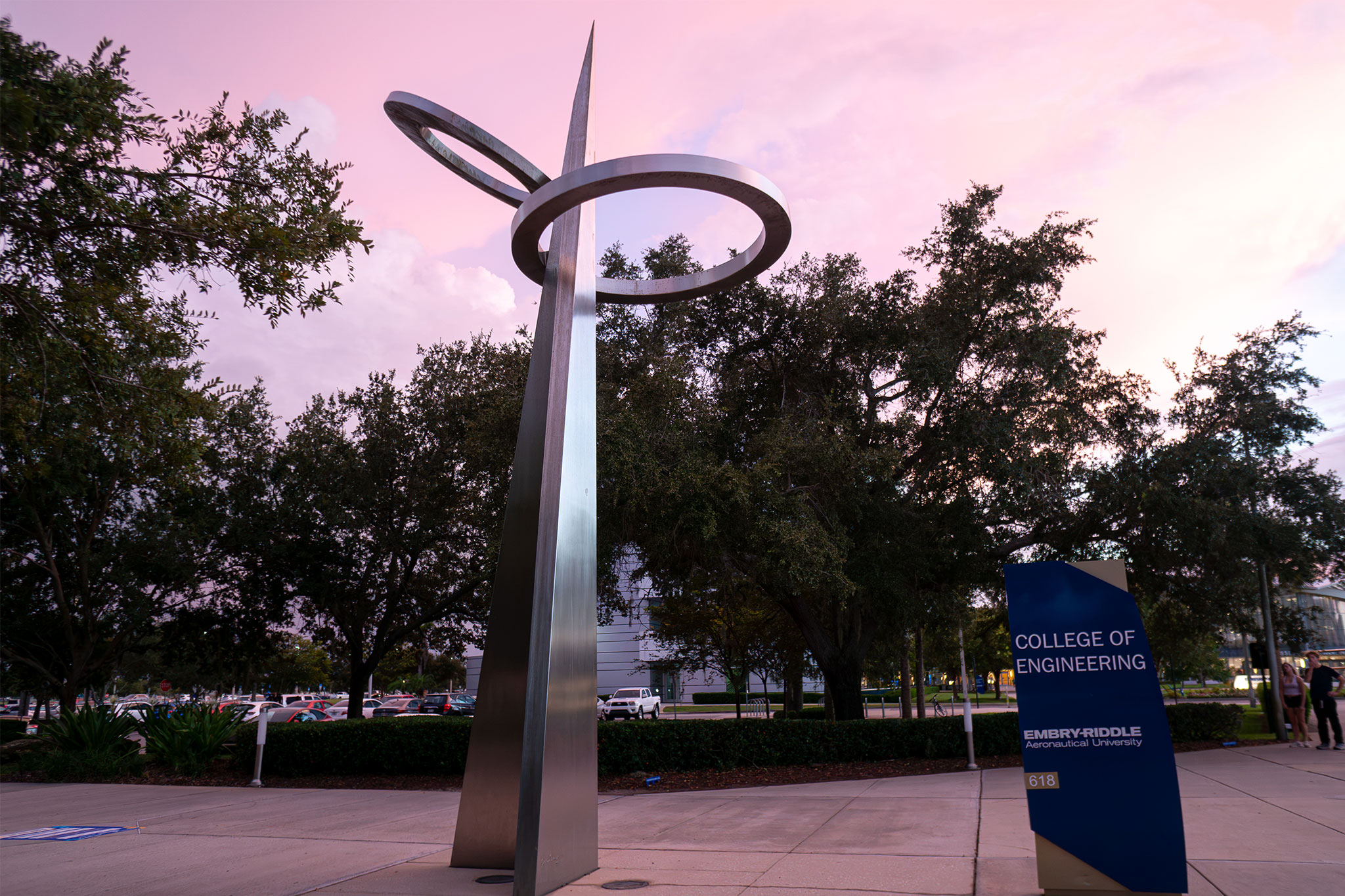
DAYTONA BEACH, Fla. — Following the duck prints into the Lehman Building, Embry-Riddle students will find the makerspace lab. Chances are, some will stumble upon the makerspace discovery program. It looks like a club on the outside, but on the inside, it's a training program that helps students become certified and gain experience in additive manufacturing.
The makerspace is a department in the College of Engineering that provides low-cost additive manufacturing services to all faculty, staff and students. Not to be confused with the physical makerspace itself, the makerspace discovery program, uses the lab and its equipment for formal training on how to safely and effectively use the space. For a small club fee, students are trained and earn many practical certifications. Currently six disciplines are offered, including FDM, SLA, recycling, composite printing, post-processing and 3D scanning.
“It’s definitely worth joining,” said Oswaldo Gomez, a sophomore studying aerospace engineering. “It’s very hands-on, and I feel like it’s one of the most freshman-friendly clubs because you just learn everything.”
Gomez has taken the program classes for FDM, composites, and scanning, and is currently taking another for his fourth certificate. He joined last year because of his interest in learning carbon fiber layups through the composite printing class, but stayed because of the numerous opportunities the discovery program had to offer.
“In the discovery program, it is really all about you and your efforts,” said Daphne Sierra Aquiningoc, an officer of the discovery program and an employee of the makerspace club. “We’re training them to do a specific thing, and by the end of it, when they get their certificate, it proves that they’re really competent at it.”
Within Makerspace
Now in a permanent location within the College of Engineering, the makerspace gives students a place to let their creativity roam while still providing guidance and emphasizing professionalism. The recent exponential growth of the program serves as a reflection of the increased interest and participation engineering students have had on both the discovery program and the makerspace.
“As an undergrad student, I always lacked the possibility to have the accessibility to build something with my hands,” said Juan Granizo, an associate professor for engineering fundamentals in the College of Engineering. Granizo, now the director of the COE makerspace, envisions it as an open and collaborative space where students can develop, strengthen and expand their technical skills. Within the shared space, students are able to ask for help and collaborate with other RSOs such as Design Build and Flight (DBF), Unmanned Aircraft Systems (UAS), and the American Society of Mechanical Engineers (ASME).
Granizo mentioned that through makerspace, the COE is able to prepare the newer engineers to be ready for the rapidly advancing industry with hands-on experience, opportunities to earn technology certifications and valuable connections within the field.
“It’s not just necessarily for your profession, but it’s also for your life—it builds and enhances the skill sets for your daily life,” said Granizo.
Beyond the Club
A benefit that many engineering students find appealing about this club is the opportunity to strengthen their resumes through training and potential work experience.
Aquiningoc is currently trained in SLA, as well as industrial additive manufacturing, a discipline expected to be offered in the upcoming year that includes training with Markforged 3D printers. She said there is a likelihood that students in the club could be offered an on-campus job at the makerspace to help teach other students in the disciplines they are proficient and certified in. For many members, including Gomez and Aquiningoc, working at the makerspace is a common goal.
“If you join the club and get your certifications, that means you’re a qualified person to use that equipment, and then you can go from the club to work in the department,” said Aquiningoc.
Beyond the professional aspects of the club, the discovery program also aims to create a welcoming and collaborative environment where students can learn from one another. Although safety and education remain the primary priorities of the program, the makerspace discovery program focuses on having a casual and friendly relationship between the members and the department.
“It doesn’t matter what is your background or your major, you are more than welcome to start utilizing the makerspace,” said director Granizo. “If you want to develop something tangible—a project or product you want to create and prototype—you can make it happen through the makerspace.”
Whether students want to earn certificates backed by the College of Engineering or gain hands-on experience using and learning machinery in the makerspace, the Makerspace discovery program is designed to support the interests and growth of all students at Embry-Riddle.
The makerspace and the discovery program are located in room 133 of the Lehman Building, and are accessible on weekdays from 8 a.m. to 9 a.m.
Top Category

Our Newsletter
Keep yourself informed with the most recent news and exclusive content.
