

Beyond Racetracks: Former NASCAR Pilot talks about Aviation Safety

DAYTONA BEACH, Fla. - When people think of NASCAR, they usually picture race cars, drivers and pit crews. But there’s another side tothe racing industry that doesn’t get nearly as much attention: aviation.
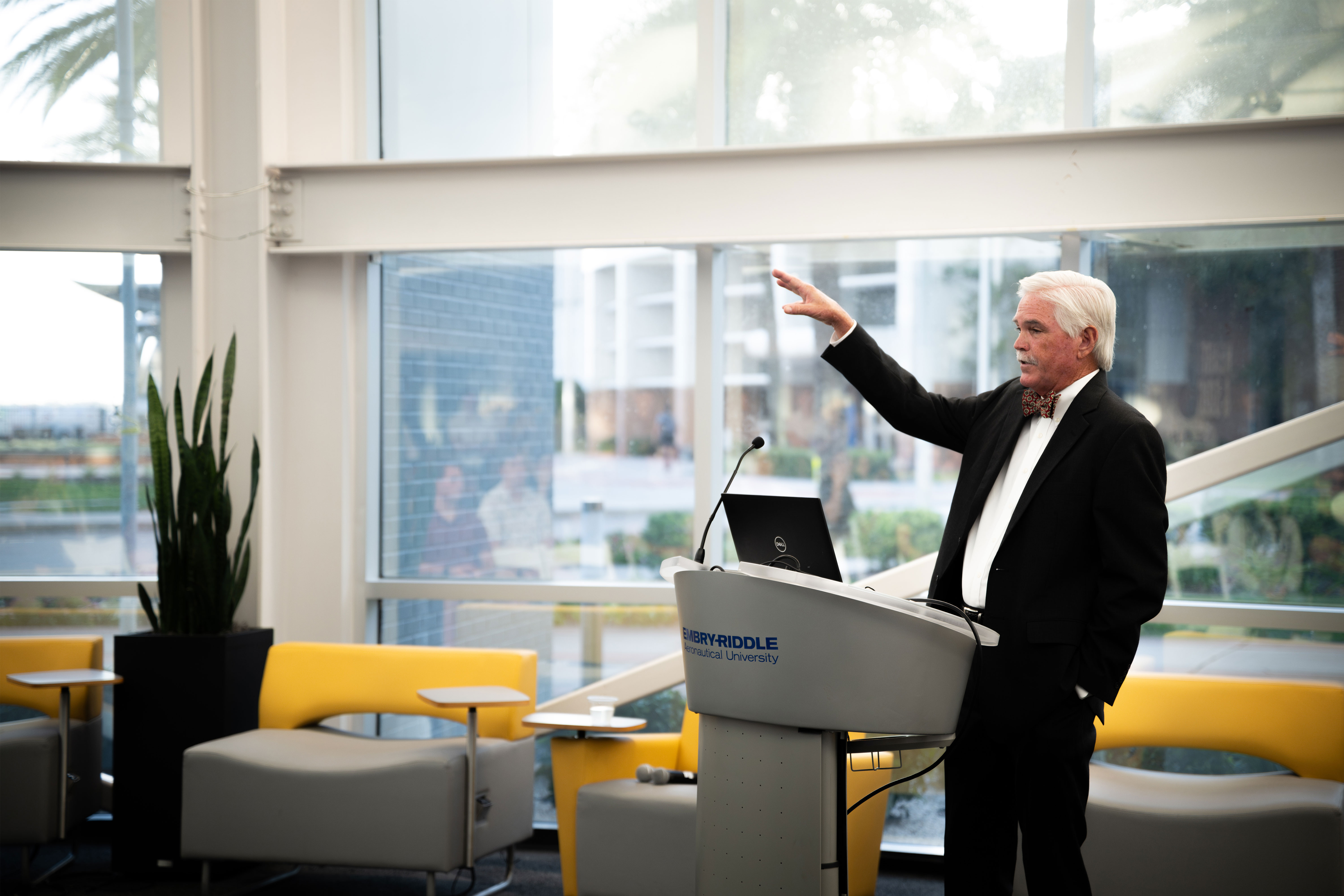
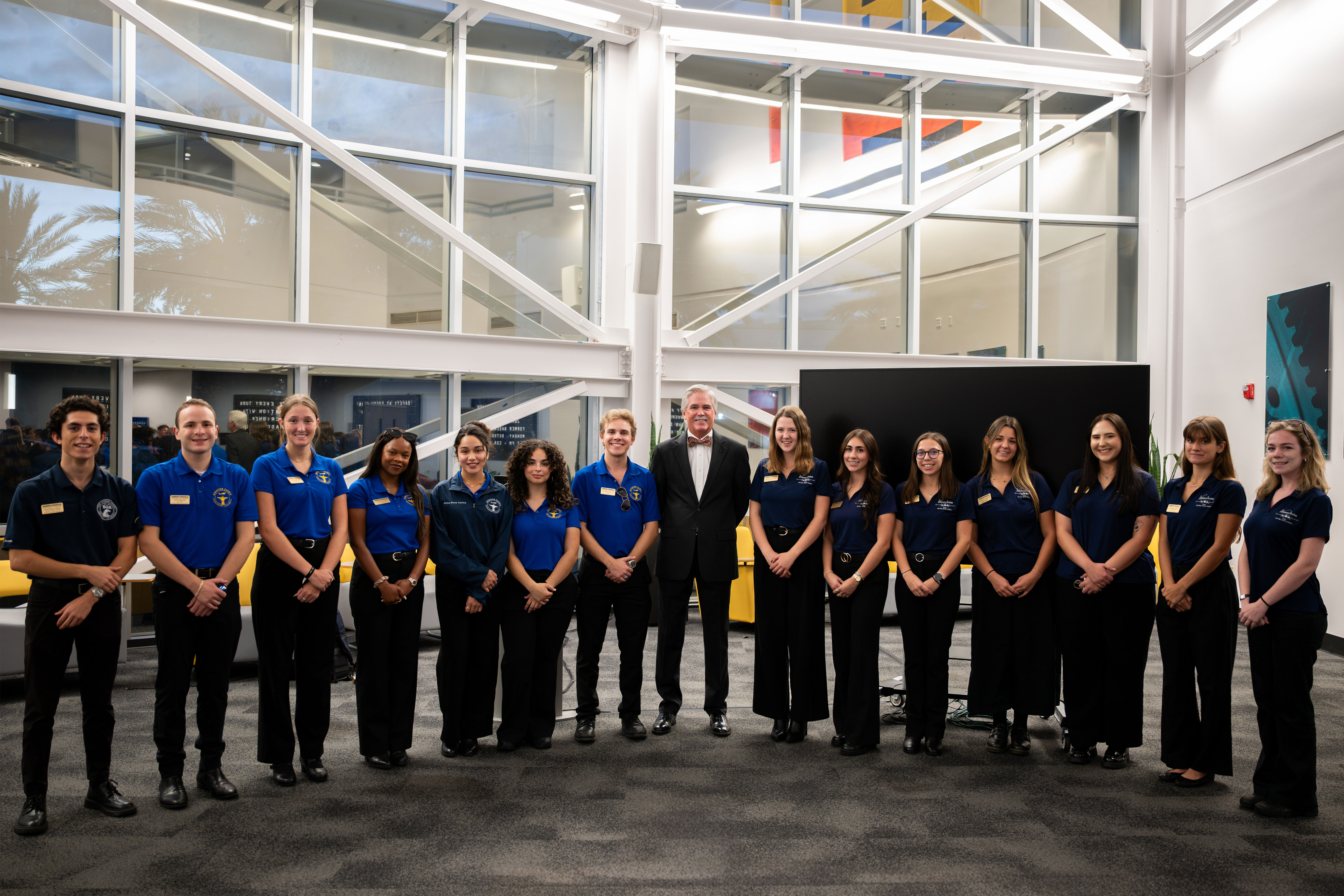
The “Safety at Every Turn” seminar, held Oct. 19, 2026, was organized by the joint effort of the Aviation Safety Advisory Council, Women in Aviation and the College of Aviation Student Senate. Former pilot for NASCAR and current assistant professor at Embry-Riddle, John Scribner was invited to speak about his time working for corporate aviation.
Scribner spent much of his career flying corporate aircraft, including nearly 20 years with NASCAR. He is no stranger to Embry-Riddle. Scribner holds a bachelor's degree and a master's degree in Aeronautical Science from Embry-Riddle, and he now teaches several classes as an assistant professor for the College of Aviation.
According to WAI President Hazel Carda, the idea for the “Safety at Every Turn” seminar came from ASAC members taking Scribner’s classes. They thought his experience in the industry would give students a chance to learn about corporate aviation and safety.
During the seminar, Scribner talked about how corporate pilots have responsibilities that go well beyond flying the aircraft. “You wear a lot of hats,” Scribner said. Beyond flying the aircraft, pilots are expected to arrange fueling, plan flights and organize ground transportation. Corporate pilots must be ready to handle several jobs at once.
Scribner also spoke about the importance of partnering with an employer who takes safety seriously. “When you are with the right company, you will know it,” he said. Safety became a priority at NASCAR's flight operations following a fatal Cessna 310 accident. Scribner described it as ‘a very, very dark day’ for the flight department. As a result, NASCAR committed to making major changes to improve the overall safety of the aviation department. “They completely overhauled the flight department,” Scribner said.A new director of aviation was signed on and a safety management system was integrated. The company also addressed more specific risks associated with piloting, such as flying at night, and small airports without emergency services.
Scribner made a point to students that safety is somethingflight departments have to continuously work on. “Safety isn’t measured bydiplomas and certificates,” he said.
Many students attended Scribner's talk hoping to learn moreabout corporate aviation as a potential career path.
Autumn, a freshman majoring in aeronautical science, was surprised to discover that NASCAR had its own flight department. This seminar opened Autumn's eyes to the variety of career opportunities that exist in aviation. One part of corporate aviation that particularly caught her attention was the companionable relationship between pilots and their passengers. Autumn liked the idea of getting to know the people she would be flying for rather than piloting aircraft full of random strangers.
Scribner's anecdotes gave students an idea of what workingin corporate aviation would reasonably look like, as well as providing advicefor those preparing to enter the field. He encouraged students to attendaviation conferences, meet people in the field and take advantage of theconnections they make at Embry-Riddle.
However, Scribner's most important piece of advice had moreto do with building community: “Cherish those friendships you're making here.”
Top Category

Our Newsletter
Keep yourself informed with the most recent news and exclusive content.
