
.png)
NASA’s Roman Space Telescope Arrives at Kennedy Ahead of Historic Launch

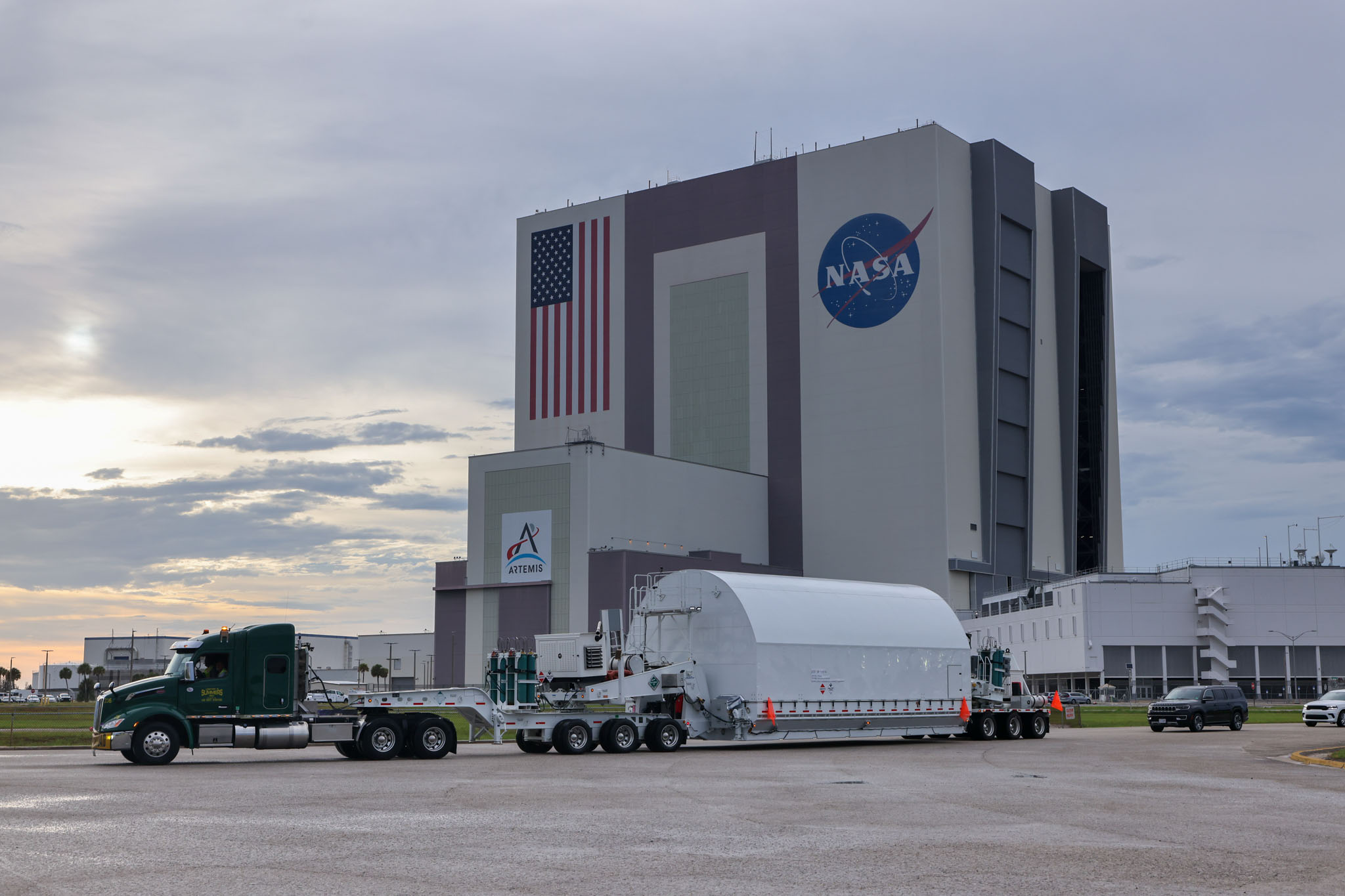
KENNEDY SPACE CENTER, Fla.— NASA’s next major observatory has arrived in Florida’s Space Coast, marking a significant milestone before a mission expected to reshape how scientists observe the universe.
NASA’s Nancy Grace Roman Space Telescope arrived at Kennedy Space Center on Sunday June 21, marking a major milestone for a mission expected to transform how scientists study the universe and search for planets beyond the solar system.
After completing construction, the observatory arrived aboard NASA’s Pegasus barge following a multi-day journey from NASA’s Goddard Space Flight Center in Maryland to Florida’s Space Coast. Roman is scheduled to launch by the end of August aboard a SpaceX Falcon Heavy rocket from Launch Complex 39A.
Named after NASA’s first chief astronomer, Nancy Grace Roman, the telescope is expected to open a new era of cosmic surveys by producing wide-field infrared images capable of revealing millions of previously unseen celestial objects and answering some of astronomy’s largest unanswered questions including dark energy, dark matter and the transformation of planetary systems, while conducting sweeping infrared surveys of the cosmos through large-scale observations of galaxies and stars.
Roman’s arrival at Kennedy signals the starts of final launch preparations inside the Payload Hazardous Servicing Facility, where teams will unpack, inspect and complete testing before fueling and integration with the launch vehicle. Neil Patel, Roman’s lead transport engineer said the arrival represents years of preparation coming together.
“It’s a big moment and it’s really fun, really exciting for us to finally see it here after spending the last two plus years working on planning all of this stuff,” Patel said during a media briefing.
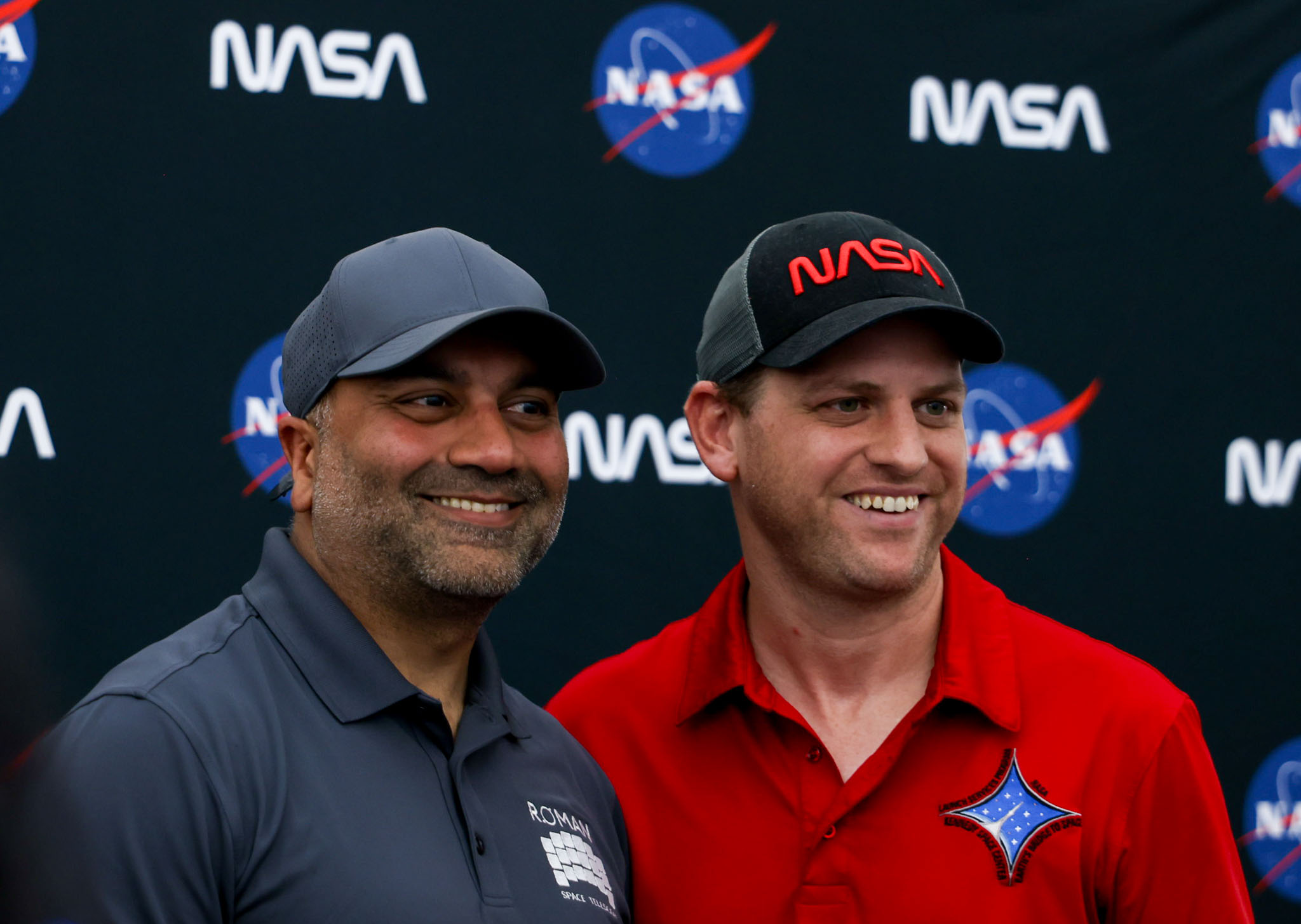
He went on to explain the observatory faced a planned air transport option before NASA transitioned to using Pegasus, due to schedule flexibility and logistics. During transit, teams encountered cooling challenges that required additional air-conditioning systems to maintain strict temperature requirements for the observatory.
“It was a tremendous effort,” Patel said. “A really great crew came down and was able to help make sure things were right.”
Now at Kennedy, teams will begin moving Roman from its shipping container into controller clean-room conditions before final spacecraft checkout.
“Once we get that in there, we close the door, then the real fun starts,” said Chris Reed, launch site integration manager with NASA’s Launch Services Program.
Construction of the telescope was recently completed following years of development led by NASA’s Goddard Space Flight Center alongside more than 60 industry and institutional partners.
The project includes contributions from major aerospace and technology organizations including BAE Systems, L3Harris Technologies and Teledyne Scientific & Imaging, alongside specialized suppliers and small and medium-sized enterprises that supported critical mission components. Teledyne developed the telescope’s imaging detectors, while companies including Jenoptik and Alluxa contributed optical systems and specialized coatings used throughout the observatory.
Roman also represents an international collaboration with contributions from the European Space Agency, Japan Aerospace Exploration Agency, France’s CNES and Germany’s Max Planck Institute for Astronomy
Roman represents NASA’s next generation of space observations, not by replacing telescopes like Hubble or James Webb, but by expanding what scientists can observe at once.
The observatory’s Wide Field Instrument will capture images with the same level of detail as Hubble while covering an area roughly 100 times larger in a single view. NASA officials have described Roman’s surveying ability a dramatically faster than previous missions, allowing researchers to build an unprecedented map of the universe.
Lucas Paganini, Roman program executive, said the mission’s scale will reshape scientific discovery.
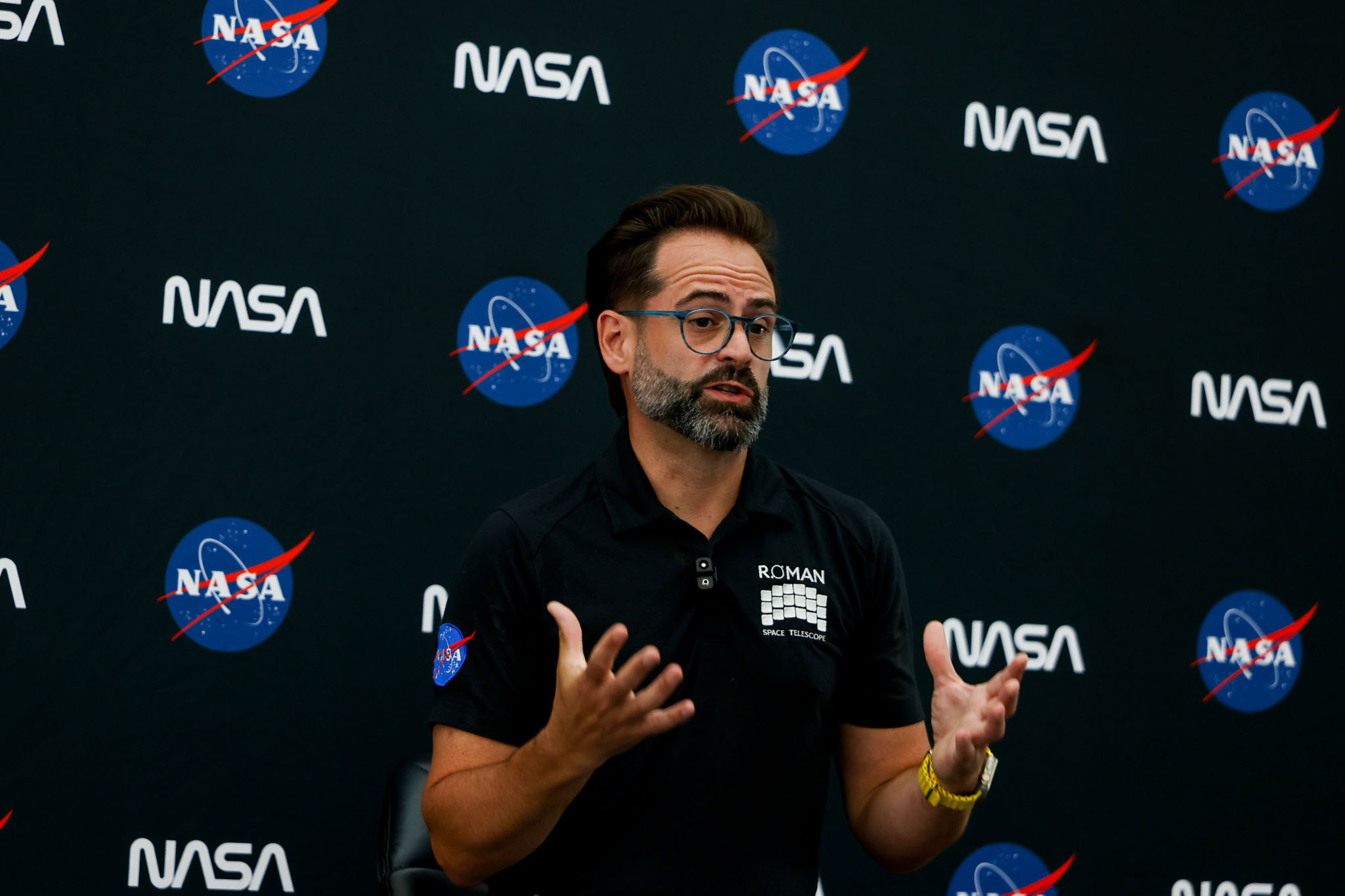
“What we’ve done in the past is observe a specific object,” Paganini said. “Now, Roman, we’re going to do it totally differently. We’re going to observe huge portions of the sky.”
NASA expects Roman to observe hundreds of millions of galaxies, map billions of stars across the Milky Way and help reveal how the universe expanded over billions of years. Researchers also expect the mission to discover thousands of new exoplanets through gravitational microlensing, including distant and potentially free-floating worlds that are difficult to detect using current methods.
Roman also carries a technology demonstration instrument that will test advanced methods of directly imaging planets orbiting nearby stars — a capability considered a major step toward future efforts to search for potentially habitable worlds.
“This is not only an observatory,” Paganini said. “This is a new way to do science.”
Roman’s primary mission is planned for five years, though NASA officials said available fuel may support operations for as long as a decade.
Unlike many scientific missions of the past, Roman’s data will ultimately be publicly available to researchers and institutions worldwide.
“You can be a scientist here in the U.S. or elsewhere in the world. You can be a student,” Paganini said.
For Embry-Riddle students and the broader Space Coast community, Roman’s arrival serves as a reminder that some of the world’s most ambitious scientific efforts continue to take shape just miles from campus, and that the discoveries made by this observatory may one day influence classrooms, research and future careers across aerospace and beyond.
See the photo collection here: www.theavion.com/photo-showcase/nasas-roman-space-telescope-arrives-at-kennedy-ahead-of-historic-launch
Recent News

Top Category

Our Newsletter
Keep yourself informed with the most recent news and exclusive content.
%20copy.png)